Understanding Acculturative Stressors With Refugee and Immigrant Populations
The migration trajectory can be a complex process. Although the resettlement process is three-fold—consisting of premigration, migration, and postmigration—this webinar will explore the process in which immigrants and refugees experience postmigration. The presentation will examine the acculturative stressors associated with the postmigration process that individuals may experience. Specific challenges and their influence on the immigrant’s mental health will also be discussed. Lastly, the attendees will examine how immigrants and refugees cope and adapt with acculturative experiences in their host country. This presentation aims to increase the attendees’ understanding of the cultural changes and adaptation of immigrants and refugees.
Participants will be able to:
- Describe the acculturative stressors that immigrant and refugee individuals experience.
- Recognize the mental health challenges associated with the adjustment process (helping the clients label his or her stressors/emotions).
- Summarize coping strategies and resources to assist immigrants and refugees in their acculturative process.
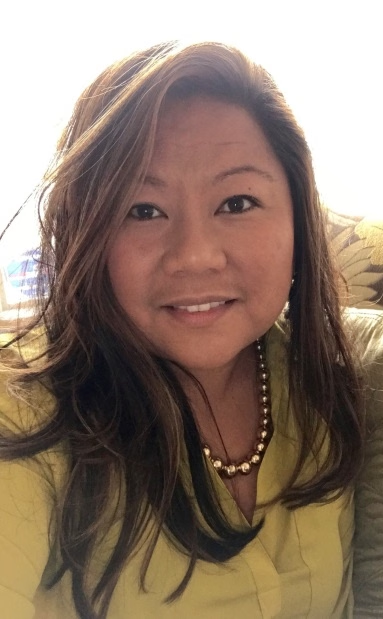
Lotes Nelson, PhD, NCC, LPC, ACS
Dr. Lotes Nelson is a clinical faculty member at Southern New Hampshire University. She received her PhD in counselor education and supervision and her MS in mental health counseling from Walden University. She received her BS in management from Montreat College.
Dr. Nelson is a Licensed Professional Counselor (LPC), a National Certified Counselor (NCC), a North Carolina Board Approved Supervisor, an Approved Clinical Supervisor (ACS), and a National Board for Certified Counselor (NBCC) Minority Fellow. As a counselor, she provides individuals, couples, and family counseling in her private practice. She is passionate about serving the underserved and never-served populations, especially individuals who have migrated to the United States or are refugees adjusting to life in the mainstream. Dr. Nelson maintains her strong advocacy involvement in both her immediate community and nationally, and she continues to raise mental health awareness by engaging in professional conference presentations and providing mental health wellness workshops. Her areas of expertise include multiculturalism with emphasis on understanding the influence of acculturation; counselor education and supervision; eating disorders; and various areas of adolescent mental health.
Dr. Nelson is a member of the following professional associations: American Counseling Association (ACA), serves on the Branding Committee and a Conference Proposal Reviewer; Association for Counselor Education and Supervision (ACES), conducts Conference Proposal Reviews; Association for Humanistic Counseling (AHC); Chi Sigma Iota (CSI), Omega Zeta Chapter, served as a Chapter Faculty Advisor and a Chapter Faculty Advisory Committee Member; Licensed Professional Counselors Association of North Carolina (LPCANC); North American Society of Refugee Healthcare Providers; and Southern Association for Counselor Education and Supervision (SACES). Dr. Nelson also holds an active volunteer role with the NBCC Foundation.
When she is not involved in her professional work, Dr. Nelson enjoys spending quality time with her husband and son. As a family, they enjoy traveling together.
NBCC Foundation has been approved by NBCC as an Approved Continuing Education Provider, ACEP No. 805. Programs that do not qualify for NBCC credit are clearly identified. NBCC Foundation is solely responsible for all aspects of the programs.
Each state sets its own requirements for licensure, including continuing education requirements to maintain licensure. Questions about CE requirements for state licensure should be directed to your state board. You can find their contact information on our state board directory.